

Ode to Blue
sacred/celebrated/renowned/reviled
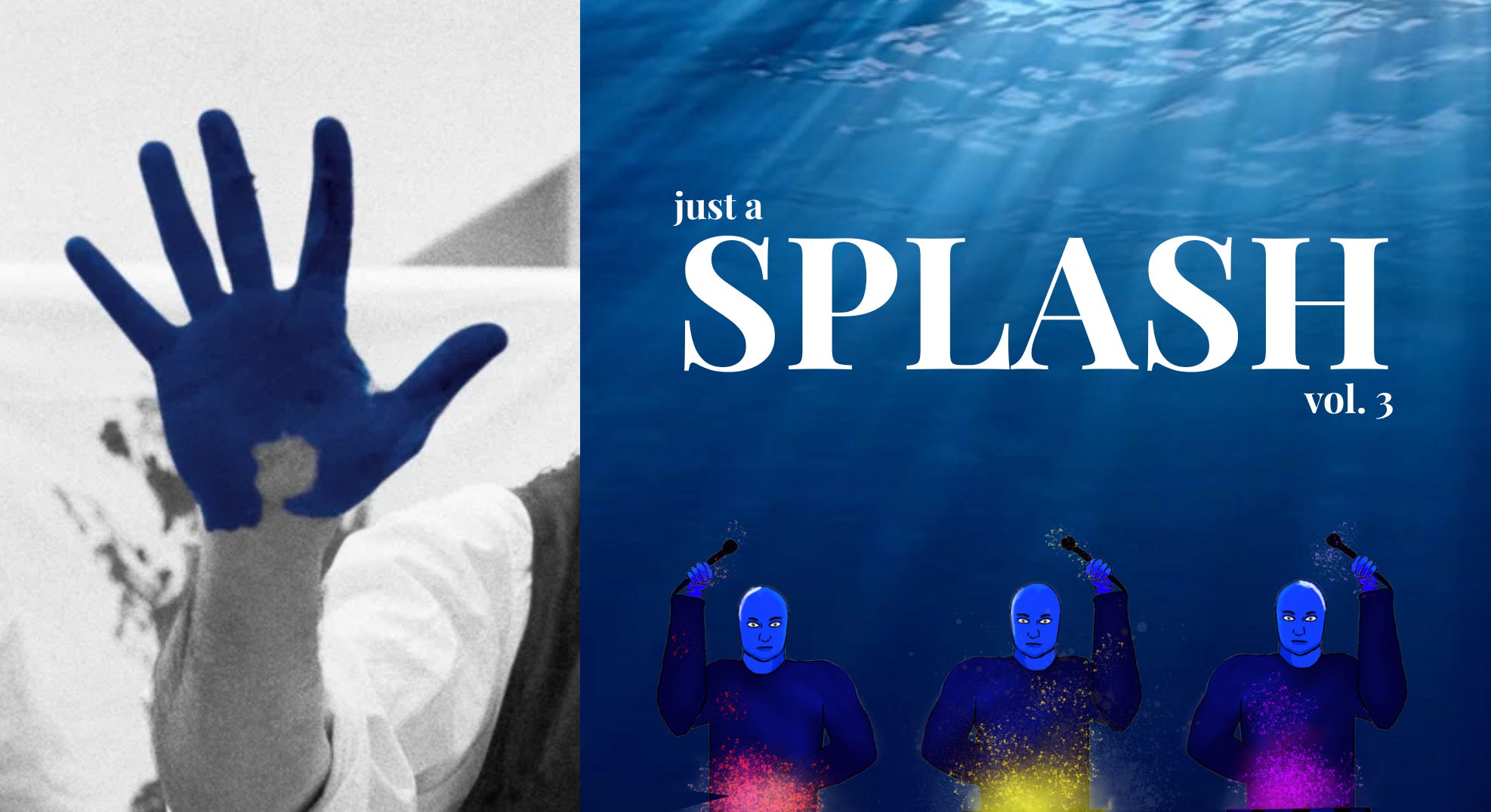
“Blue has no dimensions, it is beyond dimensions, whereas the other colours are not… All colours arouse specific associative ideas, psychologically, material or tangible, while blue suggests at most the sea and sky, and they, after all, are in actual, visible nature, what is most abstract.” – Yves Klein
Blue is the color of the intangible. It’s a trick of light. A perception. You can spend a lifetime moving toward blue: the horizon, the sea, that perfect afternoon sky, and never arrive. It recedes as you approach it, a promise unfulfilled.
In 1958, at Galerie Iris Clert in Paris, Klein opened The Void. Nearly 3,000 attendees were served a blue-hued cocktail as they waited in line to pass through a draped entryway. The gallery itself was empty, the walls stark white. Guests filed in, surely perplexed and annoyed by the gag. Only to discover soon after that the exhibit had been circulating throughout their own bodies, emerging as bright blue urine! They were the medium; the color was the message.
Since learning this, I haven’t been able to stop thinking about it! I even considered recreating it myself but the contraindication between methylene blue and SSRIs could take down like 80% of Los Angeles so scratch that, unfortunately.
I’ve spent most of my adult life thinking about cocktails: balance, temperature, dilution, glassware selection, whether a garnish actually contributes to the experience. I do not enjoy a stunt drink or pointless gimmicks. No smoke and mirrors for me, thanks. Just make it look pretty and taste great. But Klein’s cocktail wasn’t a gimmick! While it wasn’t necessarily aimed solely at deliciousness (though gin, Cointreau, and tonic sounds perfectly fine), it did something more subtle: making you reconsider where the drink ends and the body begins.
Which is why it made me think of a place that could not be further from a Paris gallery.
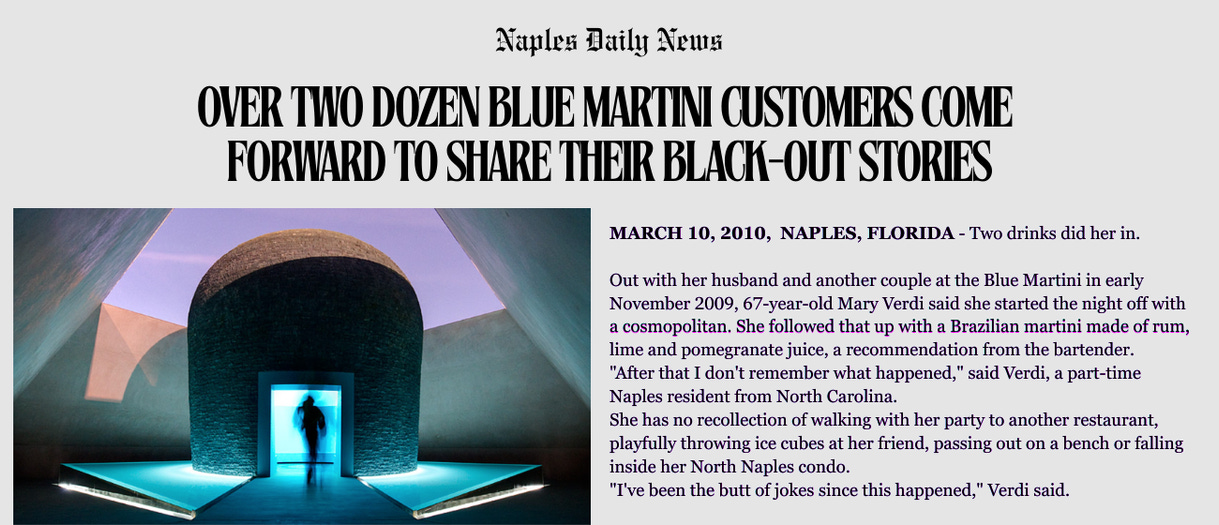
On July 31, 2009 the Blue Martini opened its doors in Naples, Florida. Hordes of wealthy retired happy hour enthusiasts descended upon its nouveau riche splendor and began slurping their way through an extensive menu of sweet and tropical drinks; often blue in color, served in aggressively huge martini glasses (which was the style at the time). Apparently unable to discern a difference between an overshaken Manhattan from their country club and these enormous vats of booze and sugar, mass blackouts soon descended upon the community. Then the outcry and accusations. The only logical explanation was that Blue Martini was drugging everyone. Why would bartenders waste perfectly good drugs on 10% tipping ass senior citizens? Nobody knows.
Klein was altering people’s bodies on purpose, infusing his signature color through their systems. Blue Martini was just serving blue drinks. But in both cases, blue becomes the emblem of a transgression.
You can, in certain cases, trademark a color. Klein patented his blue to capture the “immateriality” of color in art and immortality for himself. Tiffany & Co. has Tiffany Blue, locked to its packaging since the 19th century. Los Angeles Dodgers have Dodger Blue, which is less a color than a civic totem in LA. The rule is that you can’t own a color universally, only in a specific application. A box, a shoe sole, a uniform. It’s wild when you think about it: to claim a slice of the visible spectrum and say: this, in this context, is mine.
Blue has long been precious. The ancient Egyptians made the first synthetic blue pigment around 2200 BCE because they couldn’t reliably find it in nature. Later, in Mesoamerica, the Maya developed “Maya Blue,” a pigment so durable it still lingers in the Chichén Itzá cenote, where sacrificial victims and objects were painted blue before being thrown into the water. There’s a layer of it at the bottom which makes swimming in there feel surreal and sacred, once you consider that it’s a mass grave. Splish splash.
In Europe, ultramarine, made from lapis lazuli, was once more expensive than gold. Painters reserved it for the most important parts of a painting. Blue, again, as something precious, not given freely.
And yet, in contemporary food and drink, blue is tacky. Lowbrow’s ultimate dog whistle.
Ask yourself what blue tastes like. There’s blue raspberry, which is not a fruit but a solution to a branding problem. In the mid-20th century, too many things were red: cherry, strawberry, watermelon, raspberry - and companies needed differentiation. So, raspberry became blue. An industrial fiction now so deeply ingrained, it hardly registers as unnatural.
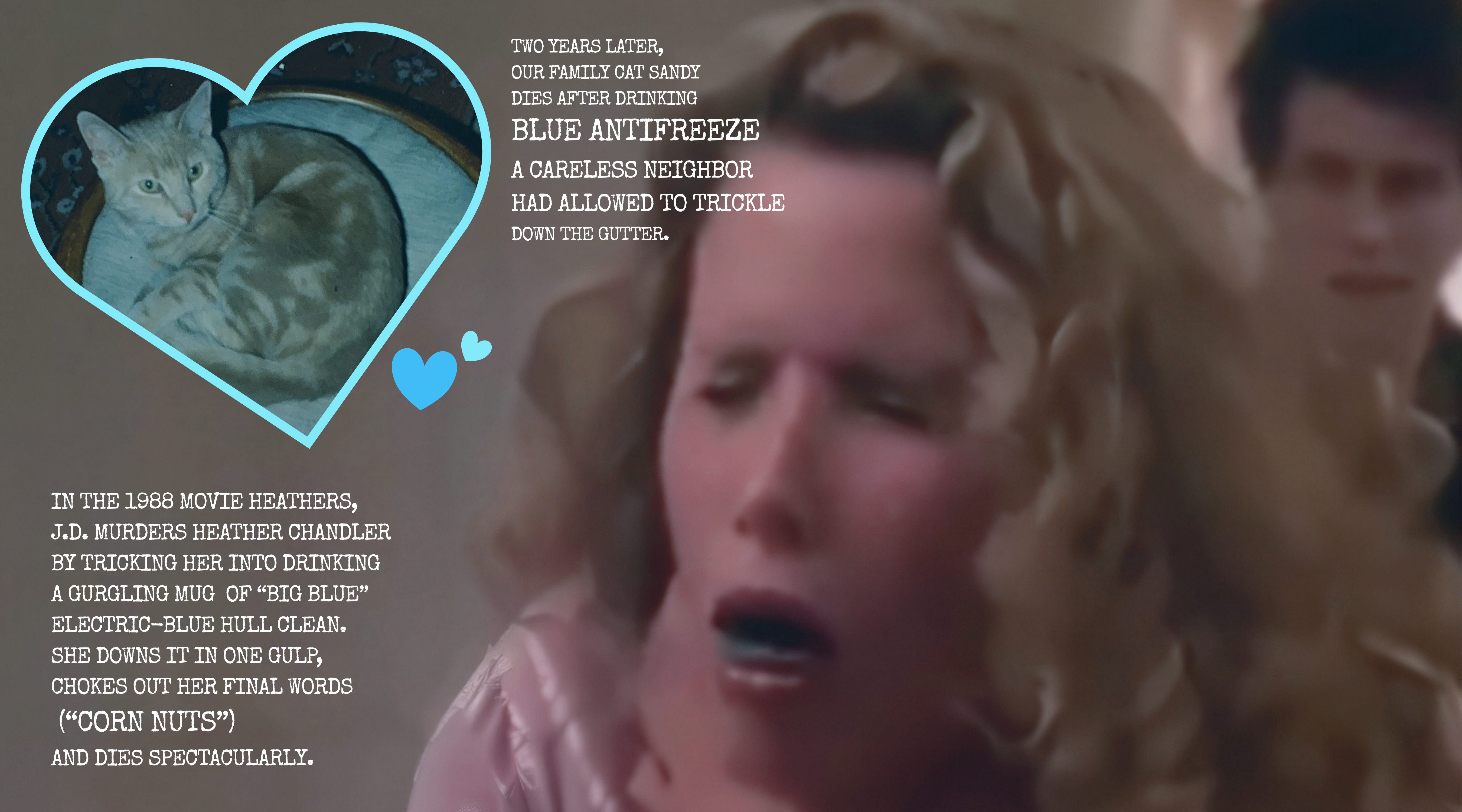
Blue in food still reads as a warning more often than an invitation. We’re trained to trust reds, yellows, greens: signals of ripeness, nutrient density and palatability. Blue, especially bright blue, suggests the opposite. Cleaning products. Antifreeze. Things you definitely should not ingest!
Artificial blue dyes are heavily regulated and safe in any amount reasonably consumed. Two drops of food coloring might contain a few milligrams while the acceptable daily intake is in the hundreds. You would have to commit very deeply to the bit to reach that threshhold. Meanwhile, the base of most blue cocktails is alcohol. Ethanol. A carcinogenic toxin. But we’ve decided that the color is the problem.
“Natural” blues like butterfly pea flower or spirulina are treated as more pure and morally superior, though they’re less consistent, sometimes less regulated, and not inherently safer in all contexts. The distinction isn’t really about chemistry; it’s about narrative. One feels clean. The other feels synthetic. The same blue that colors a sports drink can appear in a bottle of glass cleaner. The difference is not the dye, it’s the context.
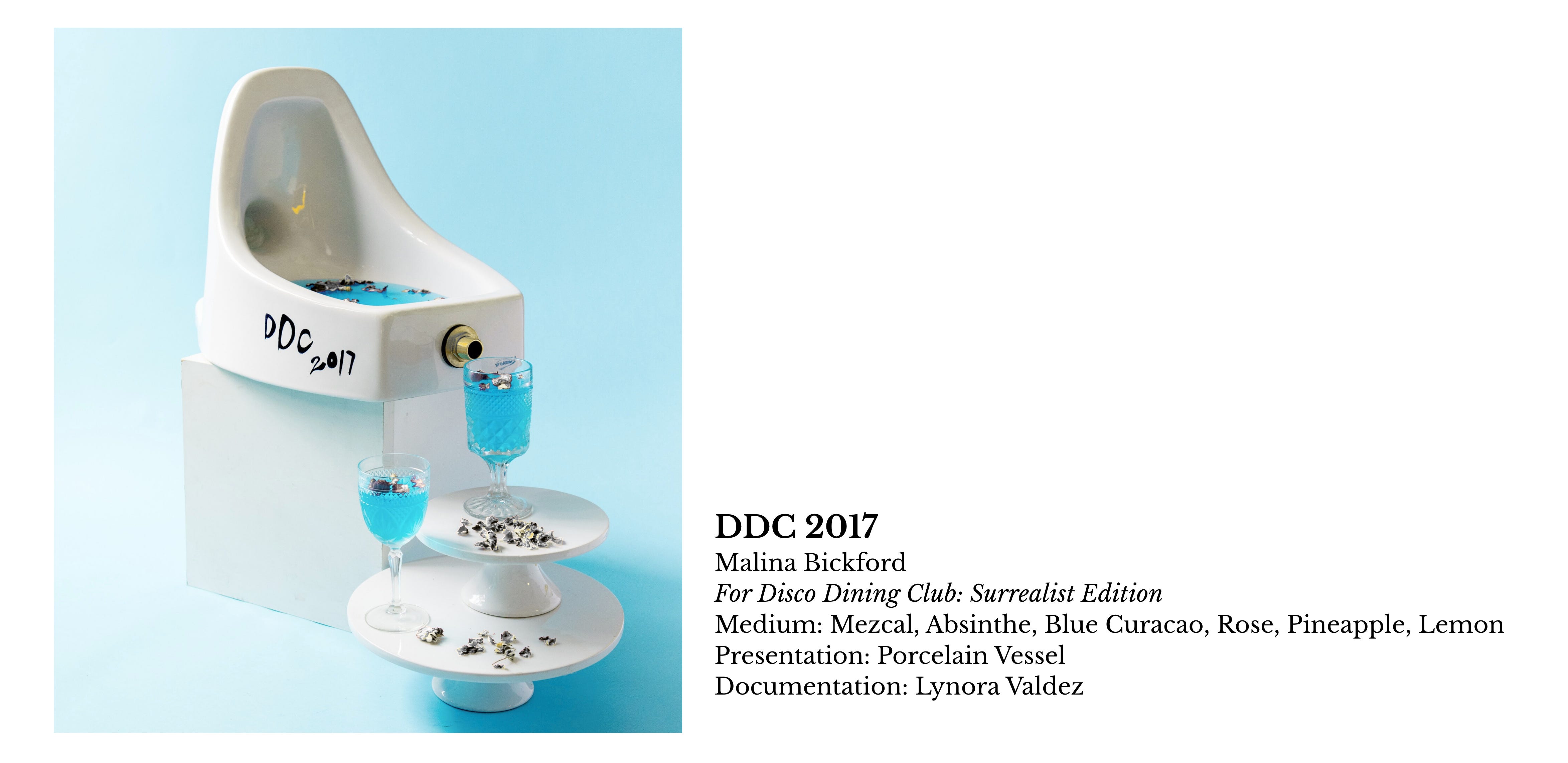
Blue cocktails occupy a strange cultural space. They’re unserious almost by definition. The Blue Hawaii, the Blue Lagoon, the Aqua Velva. The Long Island lineage, lit up electric blue and renamed with varying degrees of aggression - “Adios Motherfucker” or “Blue Motherfucker,” depending on geography and mood.
You can hold the ocean in a hurricane glass and taste the sky. Stain your tongue, spill a little on your best white shirt. Prove, for a moment, that something immaterial passed through you and left a trace. Pour it, pee it, patent it, deride it all you want - blue answers to no one.
Committed to the bit, I rummaged through my hoarder stash of drinks and pulled out every blue beverage plus natural/unnatural dyes to mix with bubble water. My pal Holly came over to help taste through them.
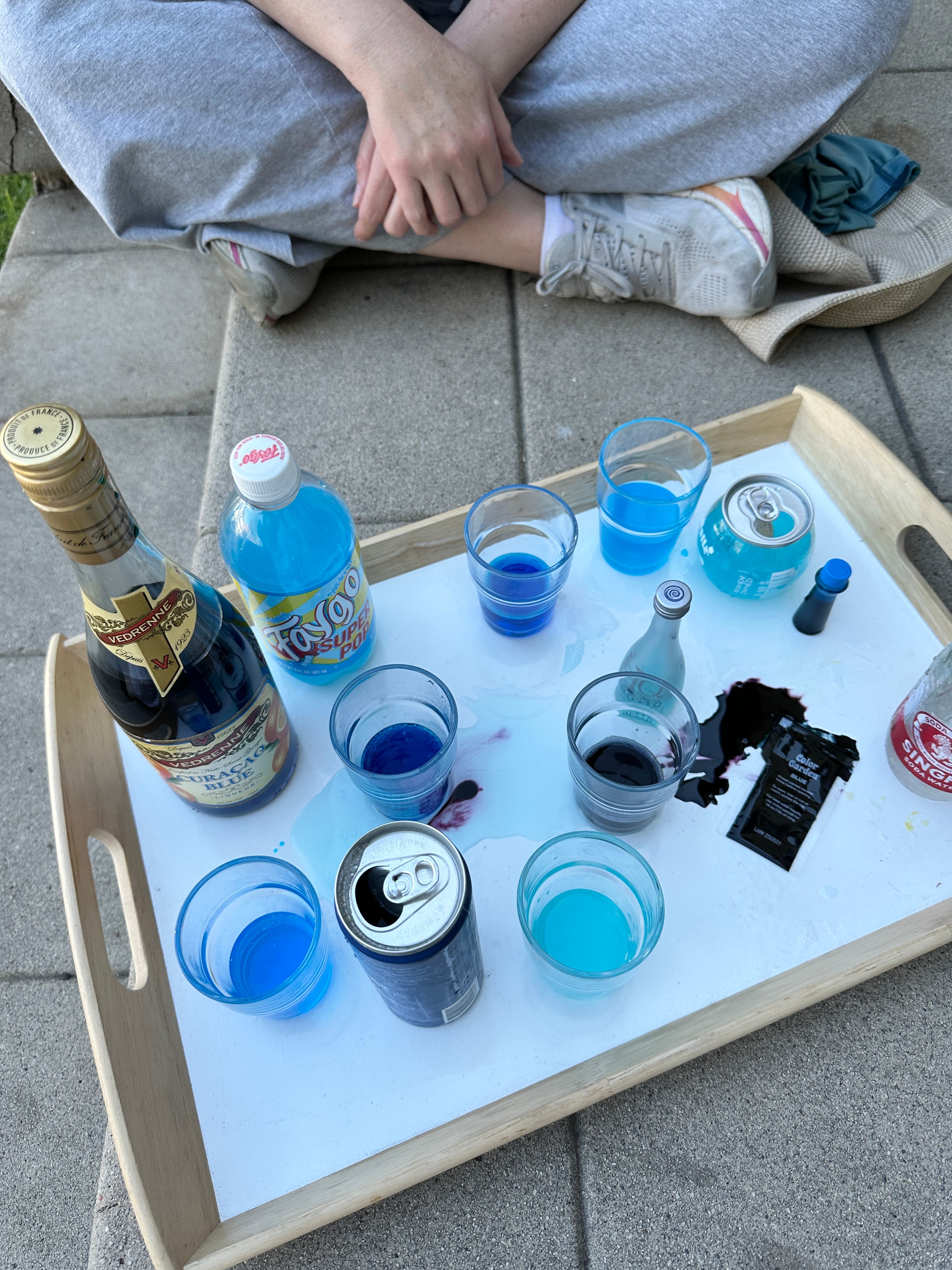
Takeaways:
Don’t order special edition Faygo flaves from Ebay and expect them to arrive at optimal freshness.
Baby’s First Buzzballz will be her (my) last. Ugh 2/10
Hypnotiq still got it.

I’ve been up to my eyeballs in Lindy West discourse but suspect most of you reading this have not!
Why Are Women Doing Their Husband’s Job Searching? 🔪🔪🔪🔪🔪🗑️🗑️🗑️🗑️🗑️
What’s the Best Trader Joe’s Snack? We decide. Only sharing this to drop a hot take: I do not fuck with TJ’s snacks at all. It’s their weakest category!